
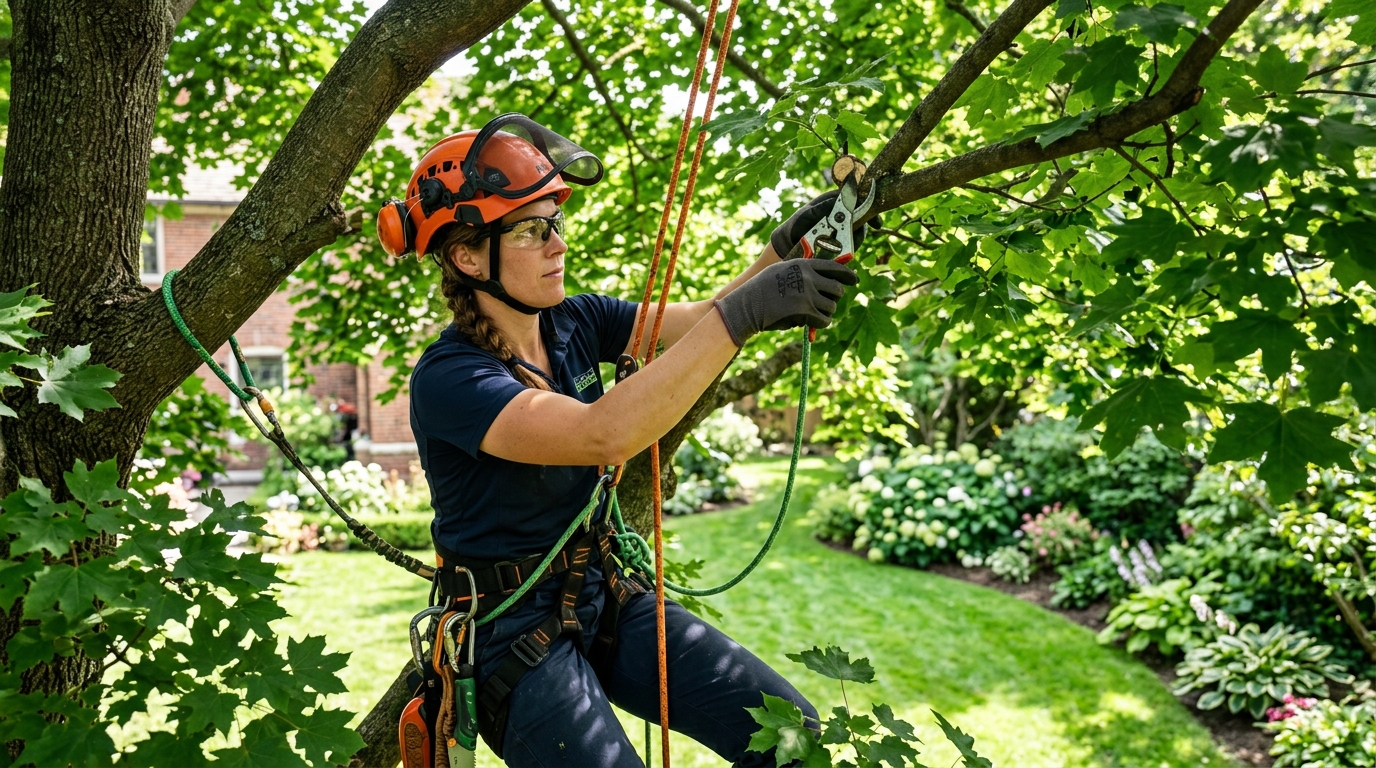
While many homeowners and landscapers use the terms tree trimming and tree pruning interchangeably, in professional arboriculture they refer to two completely different services with distinct objectives, tools, and optimal timing.
Using the wrong method or trimming at the wrong time of year can stunt tree growth, invite lethal fungal infections, or permanently destabilize heavy canopy branches. Here is the definitive breakdown of how trimming and pruning differ and how to choose the right service for your property.
1. What Is Tree Trimming? (Aesthetics & Clearance)
Tree trimming focuses primarily on controlling overgrown foliage, shaping the canopy for visual appeal, and creating clearance around structures, power lines, driveways, and sidewalks.
Primary Trimming Objectives:
- Aesthetic Shaping: Maintaining clean geometric lines on formal hedges, privacy borders, and decorative ornamentals. - Clearance Maintenance: Shearing back branches that rub against roof shingles, block solar panels, or hang low over pedestrian walkways. - Sunlight & Turf Health: Thinning outer leaf layers to allow sunlight to penetrate down to grass lawns and flower beds.Tools Used in Tree Trimming:
- Manual hedge shears and electric/gas hedge trimmers - Pole saws and loppers - Light hand prunersTypical Frequency: 1 to 3 times per year depending on plant growth rates.
2. What Is Tree Pruning? (Health & Structural Integrity)
Tree pruning is a precision horticultural practice aimed at safeguarding the biological health, structural stability, and longevity of a tree. Pruning involves strategically amputating specific diseased, infested, dead, or crossing branches.
Primary Pruning Objectives:
- Disease Prevention & Eradication: Removing limbs infected with blight, oak wilt, or wood-boring insects before pathogens spread to the heartwood. - Structural Integrity: Eliminating "co-dominant stems" (competing trunks with V-shaped crotches) and excessive end-weight that could cause canopy failure during severe windstorms. - Crown Thinning & Air Circulation: Selectively thinning interior branches to reduce wind resistance (wind-sail effect) and increase airflow, preventing mold and fungal growth. - Crown Raising: Removing lowest branches to elevate canopy height permanently.Tools Used in Tree Pruning:
- Precision bypass hand pruners (sanitized between cuts) - Hand pruning saws and folding Japanese tri-edge saws - Heavy-duty hydraulic chainsaws with biodegradable bar lubricantsTypical Frequency: Once every 2 to 4 years for mature trees; annually for young training trees.
Trimming vs. Pruning Comparison Table
| Feature | Tree Trimming | Tree Pruning |
|---|---|---|
| Core Objective | Beauty, shape, perimeter clearance | Tree health, safety, structural integrity |
| Target Plants | Hedges, shrubs, decorative trees | Mature shade trees, hardwood species, fruit trees |
| Tools Required | Shears, hedge trimmers, light loppers | Sanitized pruning saws, chainsaws, pole saws |
| Execution Timing | Throughout active growing season | Late winter/early spring (dormant season) |
| Typical Cost | $200 – $600 per visit | $400 – $1,200 per tree |
| Risk Level | Low | High (requires working at heights) |
When Is the Best Time of Year to Trim or Prune?
- Dormant Season (Late Winter to Early Spring):
- Spring Flowering Trees:
- Summer Growth Management:
- Storm Prevention (Autumn Warning):
DIY vs. Hiring a Certified Arborist (ISA)
While trimming low garden hedges is a great weekend DIY task, mature tree pruning should always be handled by an ISA-Certified Arborist (International Society of Arboriculture).
Safety Warning: Working near power lines, on ladders with chainsaws, or climbing large trees carries severe electrocution and fall hazards. Licensed tree contractors carry standard $2,000,000 general liability insurance and workers' compensation coverage to protect homeowners from catastrophic liabilities.
Ready to schedule professional tree trimming or pruning? Search licensed local tree care contractors on TreeRemovalNear.com today to get competitive free quotes.
Need a Verified Tree Removal Pro in Your City?
Avoid contract delays and unexpected pricing. Search our nationwide directory of licensed, highly-rated tree cutting and stump specialists with verified customer reviews.
Find Contractors Near You →